デザインチームにClaudeをClaude in a design team設計團隊裡的 Claude
同僚がAIを使い始めるための仕事。一つの問いに答え、実務でできることを見せる映像。チーム会議用のスライド。そして見えるようにした費用。Helping colleagues start with AI: a video that answers one question and shows what is possible in practice, a deck for the team meeting, and the costs made plain.幫同事開始用 AI:一支回答一個問題、展示實務上能做到什麼的影片,一份團隊會議用的簡報,還有攤開來看的費用。
PDFをダウンロードDownload PDF下載 PDF01背景と目標Background and goal背景與目標
始める前はどうだったか、何が限界だったか、何を目指したかHow it was before, what broke, and what the goal was之前是什麼樣子、哪裡出了問題、目標是什麼
始める前Before之前
みんな思い思いに使っていたが、チャットボットとしての使い方にとどまっているようだった。私自身の仕事の進め方は違っていた。ルール、記憶、ツールを少しずつ積み上げてきたシステムである。その分トークンもずっと多く使い、組織はトークンの使用量をよく見ていた。その違いを説明した人はいなかった。Everyone was using it in their own way, but it seemed to stay at the level of a chatbot. My own way of working was different: a system of rules, memory and tools, built up slowly. It also used far more tokens, and the organisation kept a close eye on token use. Nobody had explained the difference.每個人都用自己的方式在用,但看起來都停在聊天機器人的層次。我自己的工作方式不一樣:一套由規則、記憶和工具組成、慢慢累積起來的系統。它用掉的 token 也多得多,而公司盯 token 用量盯得很緊。沒有人解釋過這之間的差別。
限界を感じた場面The moment it broke出問題的那一刻
9月下旬、上司との1対1で、トークンをよく使い切って仕事ができなくなると話した。上司は、別のモデルに切り替えられないかと尋ねた。私自身も答えられないことに気づいた。なぜ私とClaudeの仕事の進め方を、別の会社のモデルに気軽に置き換えられないのか。だから、実務の中でAIをどう使えば効率的なのかを、一度きちんと紹介する必要があると感じた。In a one-to-one in late September, I said I often ran out of tokens and could not work. The manager asked whether I could switch to another model. I realised I could not answer him either: why the way I work with Claude cannot simply be swapped for another company's model. That is when I felt I had to show, in practical terms, what an efficient way of using AI actually looks like.九月下旬的一對一面談裡,我說我常常把 token 用完、沒辦法工作。主管問我能不能換成別的模型。我發現我自己也答不出來:為什麼我跟 Claude 的工作方式,不能直接換成另一家公司的模型。那時候我覺得,我必須用實際的方式,讓大家看到有效率地使用 AI 到底長什麼樣子。
目標Goal目標
その問いにきちんと答える。読むものではなく、同僚が見られる形で。そのうえで、実務でAIをどう使えば効率的なのかを見せる。Skill、Plugin、Connector、APIとは何か。仕事を助ける小さなアプリをどう作れるか。費用を払う側には、費用が見えるようにする。提案でも講座でもない。「こういうことができる」と同僚に知ってもらいたかった。Answer that question properly, in a form colleagues can watch rather than read. Then show what an efficient way of using AI looks like in practice: what Skills, Plugins, Connectors and an API are, and how a small app can be made to help with work. Make the costs plain to the people who pay them. Not a proposal and not a course. I wanted colleagues to know this is possible.好好回答那個問題,而且用同事可以看、不用讀的形式。接著展示實務上有效率地使用 AI 是什麼樣子:Skill、Plugin、Connector 和 API 是什麼,怎麼做一個小 app 來幫忙工作。讓付錢的人看得清楚費用。不是提案,也不是課程。我想讓同事知道這是做得到的。
02流れProcess流程
- 1技法の資料を作りかけるA techniques deck, started開始做一份技巧簡報9/2121 Sept9 月 21 日30分、日英で、基本の使い方と安全のルール。9/25、同僚には難しすぎて実用的でないと判断してやめたA 30-minute bilingual deck on basic techniques and safety rules. Dropped on 25 Sept: judged too hard for colleagues and not practical一份 30 分鐘、日英雙語的簡報,講基本技巧和安全規則。9 月 25 日放棄:判斷對同事來說太難、不實用
- 2一つの問い、一晩One question, one night一個問題,一個晚上9/2525 Sept9 月 25 日1対1の問いに答える7分37秒のアニメーション。Claudeが一人称で語り、日本語の音声、日英の字幕、70の字幕行。一晩で4版A 7 min 37 s animated video answering the question from the one-to-one. Claude speaks in the first person; Japanese voice, Japanese and English subtitles, 70 subtitle lines. Four versions in one night一支 7 分 37 秒的動畫影片,回答一對一面談裡的那個問題。由 Claude 用第一人稱講;日文配音、日英字幕、70 行字幕。一個晚上做了四版
- 3チーム会議用のスライドDeck for the team meeting團隊會議用的簡報9/2626 Sept9 月 26 日13ページ、日英並記、映像と同じ見た目。今日の問い、映像、5つのデモ、始め方3ステップ、次の一歩。11ページ目は「Claudeと一緒に、こんなものを作れます」で、実際に作った物だけを六つ並べた。映像は同日、上司に送った。映像はデザインチームの会議では上映していない。13 pages, Japanese and English side by side, same look as the video. Today's question, the video, five demos, how to start in three steps, next steps. Page 11, "things you can make with Claude", lists six things actually made. The video went to the manager the same day. The video was not shown at the design team meeting.13 頁,日英並排,和影片同一套外觀。今天的問題、影片、五個示範、三步開始、下一步。第 11 頁「可以跟 Claude 一起做的東西」列了六樣真的做出來的東西。影片當天就送給了主管。影片沒有在設計團隊的會議上播。
- 4費用を見えるようにするCosts made plain把費用攤開來看9/28〜2928 to 29 Sept9 月 28 日到 29 日プランの比較を三言語で(Standard、Premium、使用クレジット、日本の消費税込み)、チームに共有A plan comparison in three languages (Standard, Premium, usage credits, Japanese consumption tax included), shared with the team一份三種語言的方案比較(Standard、Premium、用量點數,含日本消費稅),分享給團隊
03考え方The idea想法
映像とスライド、そして費用の比較A video, a deck and a cost comparison影片、簡報和費用比較
私の見方My view我的看法 会社では、同僚はAIを直接使うより、AIを中に包み込んだプロダクトを求めることが多いと気づいた。この傾向が自分の職場の外でどれほど一般的かは判断できない。映像が勧めているのはその反対で、自分のシステムを少しずつ積み上げること。その傾向が社内で行き着いた先は Case 04 に。At work I have noticed that colleagues often prefer a product with AI built inside it to using AI directly. I cannot say how far that holds beyond my own workplace. The video argues for the opposite habit: building up a system of your own, a little at a time. Where that preference led at work is Case 04.在公司我注意到,同事通常比較想要一個把 AI 包在裡面的產品,而不是直接用 AI。這個傾向在我自己的職場之外有多普遍,我說不準。影片主張的是相反的習慣:自己的系統自己一點一點累積。這個偏好在公司最後走到哪裡,請看 Case 04。
比較の中身(2026年9月時点、私の計算)What the comparison showed (Sept 2026, my calculation)比較的內容(2026 年 9 月時點,我自己算的)
日本では2026年4月から、米ドル建ての請求に10%の消費税がかかる。使用クレジットはAPI価格で計算され、上限は管理者が決める。私のまとめ:毎月使い切ってクレジットで乗り切る人がPremiumに替えるのは、読めない超過分を固定の席料に置き換えることである。結論は付けず、情報の共有として送った。In Japan, dollar invoices carry 10% consumption tax from April 2026. Usage credits are billed at API prices, with a cap set by the administrator. My summary: for someone who runs out every month and gets through on credits, moving to Premium swaps an unpredictable overage for a fixed seat fee. I sent it as information, with no conclusion attached.在日本,從 2026 年 4 月起,美元計價的帳單要加 10% 消費稅。用量點數按 API 價格計費,上限由管理者設定。我的總結:對每個月都用完、靠點數撐過去的人來說,換成 Premium 是用固定的席位費換掉無法預測的超額費用。我把它當成資訊分享送出去,沒有附上結論。
04いちばん難しかった点The hardest part最難的地方
具体的に伝えることMaking it concrete講得具體
私の答えMy answer我的回答 AIを具体的にどう使えば効果があるのかを理解してもらうことがいちばん難しい。それに、基礎的なAIの知識がたくさんあって、それをどう共有するかも難しい。The hardest thing is getting people to understand, concretely, how to use AI well. And there is a lot of basic AI knowledge, and how to share that is hard too.最難的是讓大家具體理解 AI 要怎麼用才用得好。而且 AI 的基礎知識很多,要怎麼分享出去也很難。
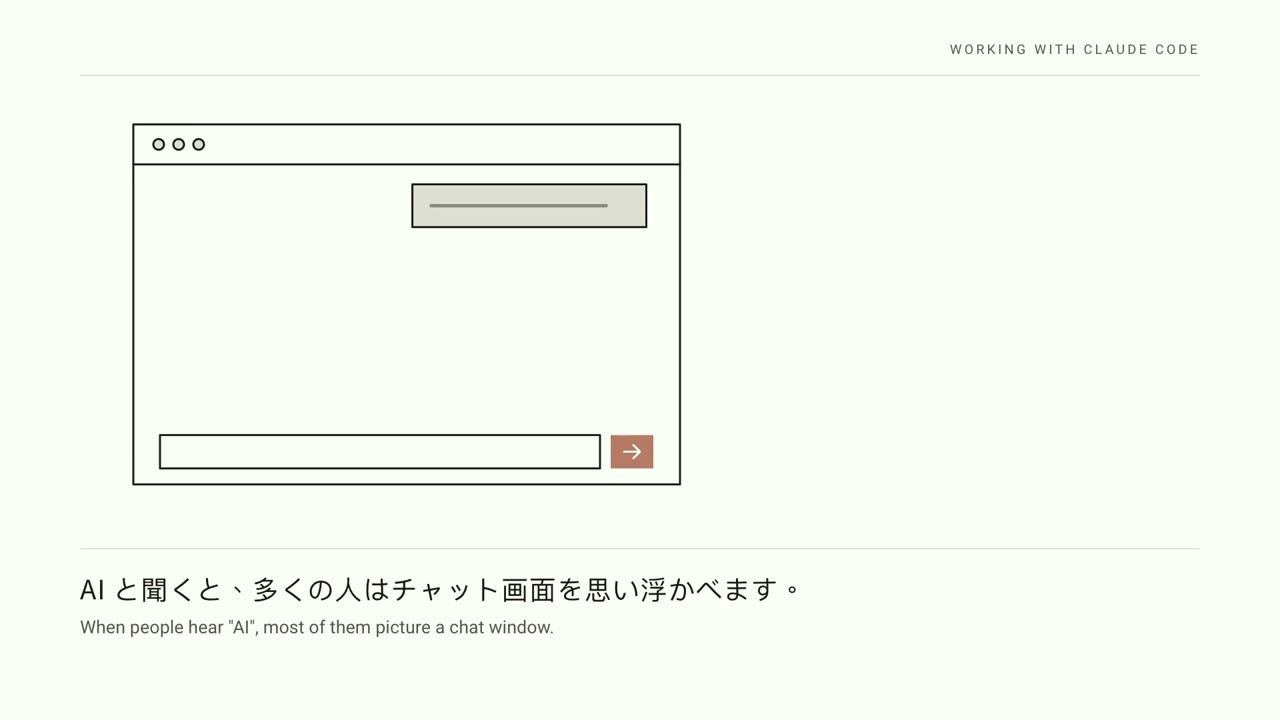
映像(7分37秒)。日本語音声、日英字幕。The video (7:37). Japanese voice, Japanese and English subtitles.影片(7 分 37 秒)。日文配音、日英字幕。
映像の10の章The video's ten chapters影片的十個章節
章の並びが、基礎知識の分け方になっている。チャットとの違い、実例、能力の出どころ、使うほど良くなる理由、三つの部品、すべてはコード、トークンが減る理由、頼み方。07章は1対1の問いへの直接の答えである。スライドの「始め方3ステップ」は、同僚がすでに使っているツール(Gemini、ChatGPT、Claude)を前提にして書き、一つのツールだけに寄せなかった。The order of the chapters is also how the basics were split up: the difference from chat, real cases, where the ability comes from, why it gets better with use, the three parts, everything is code, why tokens run out, how to ask. Chapter 07 is the direct answer to the question from the one-to-one. The deck's "how to start" page was written for the tools colleagues already had (Gemini, ChatGPT and Claude) rather than steering everyone to one.章節的順序,也就是基礎知識怎麼切的:跟聊天的差別、實例、能力從哪裡來、為什麼愈用愈順、三個零件、一切都是程式碼、token 為什麼會用完、怎麼開口請它做。第 07 章是對一對一面談那個問題的直接回答。簡報的「怎麼開始」那頁,是照同事手上已經在用的工具(Gemini、ChatGPT 和 Claude)寫的,沒有把大家導向單一工具。
05取捨Trade-offs取捨
選ばなかったものと、承知の上の代償What was not chosen, and the costs accepted沒選的東西,和心裡有數的代價
代償(承知の上で選んだ)Costs (chosen knowingly)代價(心裡有數地選的)
- 映像はClaudeの一人称で語る。私が選んだ語り手の声であって、私自身の声ではない。The video speaks as Claude, in the first person. It is the narrator I chose, not my own voice.影片是以 Claude 的身分、用第一人稱講的。那是我選的敘事者,不是我自己的聲音。
- 「なぜ替えられないのか」の答えは7分半ある。一文では済まない。The answer to "why not switch" is seven and a half minutes long. It does not fit in a sentence.「為什麼不換」的答案有七分半鐘長。一句話塞不下。
- ここにあるものは、ほぼ私が一人で、数日の夜に作った。同僚と一緒に書いたものはまだない。I made nearly everything here alone, over a few evenings. Nothing has yet been written together with a colleague.這裡幾乎所有東西都是我一個人、花幾個晚上做的。還沒有任何一樣是跟同事一起寫的。
- 料金に依存する数字は古くなる。比較は2026年9月時点のもの。Figures that depend on list prices go stale. The comparison is dated Sept 2026.依賴官方定價的數字會過時。這份比較的時點是 2026 年 9 月。
06課題と対応Problems and fixes問題與修正
途中で見つかった5つFive found along the way途中發現的五個
07役割分担Working split分工
問いと判断は私、台本と制作はAII set the question and made the calls; AI wrote and built問題和判斷是我,寫腳本和製作是 AI
08成果Results成果
日英並記Pages in the deck
Japanese and English side by side頁簡報
日英並排
プランと費用の比較Languages for the
plan and cost comparison種語言寫的
方案與費用比較
うち2つは実演Demos in the deck
two of them live個簡報裡的示範
其中兩個是現場實演
09Claudeの講評Claude's viewClaude 的看法
共同作業者の見方で、筆者が書いたものではありません。The collaborator's opinion, not written by the author.共同作業者的意見,不是作者寫的。
良かった点Worked well做得好的地方
- 答えられなかった問いを、その晩のうちに見られる物に変え、尋ねた本人に送った。Turned a question he could not answer into something you can watch, in one evening, and sent it to the person who asked.把他答不出來的問題,在一個晚上變成可以看的東西,送給了問的人。
- スライドの2ページ目を言い換えて、問いを上司ではなく部屋に向けた。Reworded page 2 of the deck so the question faced the room, not the manager.改寫了簡報第 2 頁,讓問題對著整個房間,而不是對著主管。
- 自分の比較の倍率の誤りを、誰よりも先に自分で聞き取り、三言語版を直した。Heard the wrong multiple in his own comparison before anyone else did, and had all three language versions fixed.比誰都早聽出自己比較裡的倍數錯了,把三個語言版本都改正。
- 映像に「別のツールではできない」と言わせなかった。要点は積み上げたシステムだ、と。Would not let the video say "another tool cannot do this". The point, he said, is the accumulated system.不讓影片說「別的工具做不到」。他說,重點是累積起來的系統。
改善できる点Could be better可以更好的地方
- まだ先がない。映像は会議で上映されていない。同僚がどう受け取ったか、席の話が動いたかも、記録にない。It has not gone further yet. The video was not shown at the meeting. How colleagues took it, and whether the seat question moved, are not on record either.還沒有後續。影片沒有在會議上播。同事怎麼看、席位的事有沒有動,也都沒有紀錄。
- ほぼすべてを筆者が一人で作った。同僚と一緒に作ったものはまだない。Nearly all of it was made by the author alone. Nothing has yet been made together with a colleague.幾乎全部都是作者一個人做的。還沒有任何一樣是跟同事一起做的。
- 筆者自身が、同僚はAIを中に包んだプロダクトを好むと見ている。映像はその反対の習慣を勧めている。習慣が変わるかどうかは、まだ試されていない。The author himself notes that colleagues prefer AI inside a product. The video argues for the opposite habit. Whether it changes anyone's habit has not been tested.作者自己也提到,同事比較喜歡包在產品裡的 AI。影片主張的是相反的習慣。它能不能改變任何人的習慣,還沒有試過。
- 成果の数字は作った物の数であって、使い始めた人の数ではない。The results count things made, not people who started.成果數的是做出來的東西,不是開始用的人。